Hantavirus Explained: Symptoms, Transmission, and the 2026 Cruise Ship Outbreak

In the first week of May 2026, the world watched closely as news broke of a mysterious outbreak on a cruise ship sailing off the coast of South America. Within days, the culprit was identified: hantavirus. For many, it was the first time hearing about this rare rodent-borne illness since the tragic death of Betsy Arakawa (Gene Hackman’s wife) in 2025.
But should you be worried? Here is the latest, well-researched data on Hantavirus Pulmonary Syndrome (HPS), how it spreads, and why scientists are paying close attention.
What is Hantavirus?
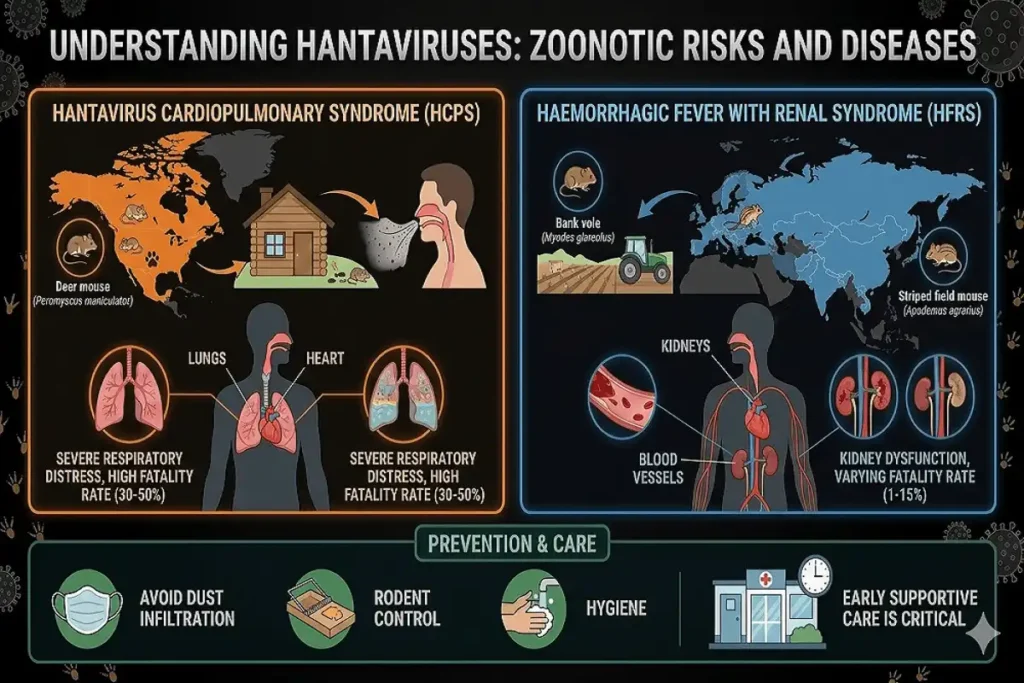
Hantaviruses are a family of viruses primarily spread by wild rodents. Unlike a cold or flu, which circulates widely every year, hantavirus is zoonotic, meaning it jumps from animals to humans.
There are two main types of clinical syndromes:
- Hantavirus Pulmonary Syndrome (HPS): Common in the Americas. It attacks the lungs and is fatal in about 30-40% of cases.
- Hemorrhagic Fever with Renal Syndrome (HFRS): Common in Europe and Asia. It attacks the kidneys.
The May 2026 Outbreak: What Happened on the Cruise Ship?
To make this blog relevant for current searches, we need to address the “News” angle.
In late April 2026, the MV Hondius cruise ship departed from Argentina. As of May 2026, the World Health Organization (WHO) confirmed multiple cases of hantavirus among passengers and crew, resulting in several deaths.
Why did this cause global alarm?
Unlike the strain found in the US (Sin Nombre), the strain identified on the ship is the Andes virus. This is the only hantavirus strain known to spread from person to person.
How Do You Catch Hantavirus?
Understanding transmission is key to reducing fear.
- The Primary Risk (Rodents):
Most people get infected by breathing in aerosolized virus particles from rodent urine, droppings, or saliva. This usually happens when sweeping out a old cabin, cleaning a barn, or disturbing nests. In the US, most cases occur west of the Mississippi River, often in rural areas. - The Rare Risk (Human-to-Human):
The Andes virus is the exception.- According to a Stanford Medicine expert, human-to-human transmission requires close, prolonged contact with a symptomatic individual. In the 2018 Argentina outbreak, transmission often occurred between sexual partners or people sharing a bedroom. Notably, healthcare workers with unprotected contact were generally not infected, showing the virus spreads inefficiently compared to COVID-19 or the flu.
Symptoms: Don’t Mistake This for the Flu
The danger of hantavirus is that it looks exactly like the flu in the beginning.
Early Symptoms (Days 4-42 after exposure):
- Fever and chills
- Severe muscle aches (often in the thighs, back, and shoulders)
- Fatigue
- Headaches and dizziness
- Nausea or vomiting.
Late Stage (Critical Progression):
If the infection progresses to HPS, symptoms escalate rapidly. Within 2 to 15 days (median 4 days), the lungs fill with fluid. Patients experience severe shortness of breath, coughing, and heart failure.
Key takeaway: If you have been exposed to rodents in the last 6 weeks and suddenly develop flu symptoms followed by difficulty breathing, seek emergency care immediately.
Treatment and Prognosis
There is no specific antiviral cure or vaccine for Hantavirus (though vaccines exist for some Asian strains, they are not available in the US or Europe).
Treatment relies on intensive supportive care.
- Early Intensive Care: Survival rates increase drastically if patients are admitted to the ICU before their lungs fill.
- ECMO: In severe cases, a machine that takes over for the heart and lungs (ECMO) has shown an 80% survival rate even when patients are crashing.
Should You Be Worried? (Risk Assessment)
Dr. Jorge Salinas from Stanford Medicine puts it bluntly: “If you’re going on a plane or a cruise this summer, I would say your risk of getting hantavirus is very close to zero.”
- For travelers: The cruise ship incident required a perfect storm of events that is unlikely to repeat.
- For outdoor workers/homeowners: The risk remains low, but real. Only about 3% of deer mice in the US carry the virus.
Prevention: How to Stay Safe
Since there is no cure, prevention is the only defense.
- The “Wet” Cleaning Method: Never sweep or vacuum rodent droppings. This kicks virus particles into the air.
- Do this: Spray droppings/nests with a disinfectant (bleach solution) and let it soak for 5-10 minutes. Wipe up with paper towels.
- Seal Up: Close gaps in your home, garage, or cabin larger than a pencil.
- N95 Mask: If cleaning a heavily infested space, wear an N95 respirator and rubber gloves.
Hantavirus is a “low risk, high consequence” disease. It is incredibly rare (only ~890 cases in the US in 30 years), but it is incredibly dangerous if contracted.
The 2026 cruise ship outbreak is a reminder that climate change and human travel are causing viruses to jump in unpredictable ways. However, unlike COVID-19, hantavirus does not transmit easily through the air in public spaces. As long as you avoid wild rodents and their droppings—and practice safe cleaning habits—you are very safe.