Course Overview
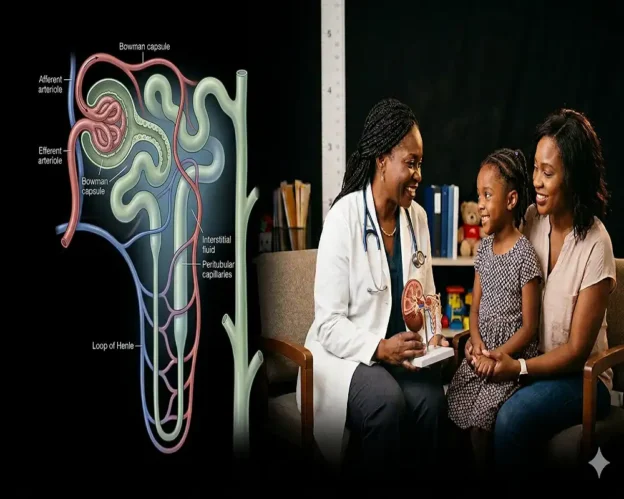
This course offers a deep and integrated exploration of pediatric nephrology, bridging the gap between fundamental scientific discoveries and their direct application to patient care. “From Bench to Kidney” signifies a journey that begins at the molecular and genetic level (“the bench”) and progresses through to the clinical presentation, diagnosis, and management of kidney diseases in children (“the kidney”).
The curriculum is designed to provide a holistic understanding of the developing kidney, the pathogenesis of renal disorders, and the latest advancements in translational research. Participants will explore how breakthroughs in genetics, immunology, and physiology are reshaping the diagnosis and treatment of conditions ranging from congenital anomalies of the kidney and urinary tract (CAKUT) to glomerulonephritis, hypertension, and chronic kidney disease (CKD) in the pediatric population.
Target Audience
This course is intended for:
- Pediatric Nephrologists (practicing and in-training/fellows)
- General Pediatricians with an interest in nephrology
- Clinical and Basic Science Researchers focused on kidney development and disease
- Geneticists and Genetic Counselors specializing in renal disorders
- Advanced Practice Providers (Nurse Practitioners, Physician Assistants) in pediatric nephrology
- Senior Medical Students and Residents considering a subspecialty in nephrology
Learning Objectives
Upon completion of this course, participants will be able to:
- Explain the key principles of kidney development, physiology, and the genetic basis of congenital and inherited renal disorders.
- Translate recent advances in molecular biology, immunology, and genetics into the diagnostic workup and therapeutic strategies for conditions like glomerulonephritis, nephrotic syndrome, and tubulopathies.
- Evaluate and apply evidence-based guidelines for the management of acute kidney injury (AKI), hypertension, and chronic kidney disease (CKD) in infants, children, and adolescents.
- Analyze the pathophysiological mechanisms behind complex clinical scenarios in pediatric nephrology, including electrolyte disorders and renal replacement therapy.
- Interpret novel biomarkers, histopathological findings, and genetic test results to formulate precise diagnoses and personalized treatment plans.
- Discuss the long-term outcomes and transitional care needs for children with kidney diseases as they enter adulthood.
Course Includes
- Course Certificate
Related Courses